
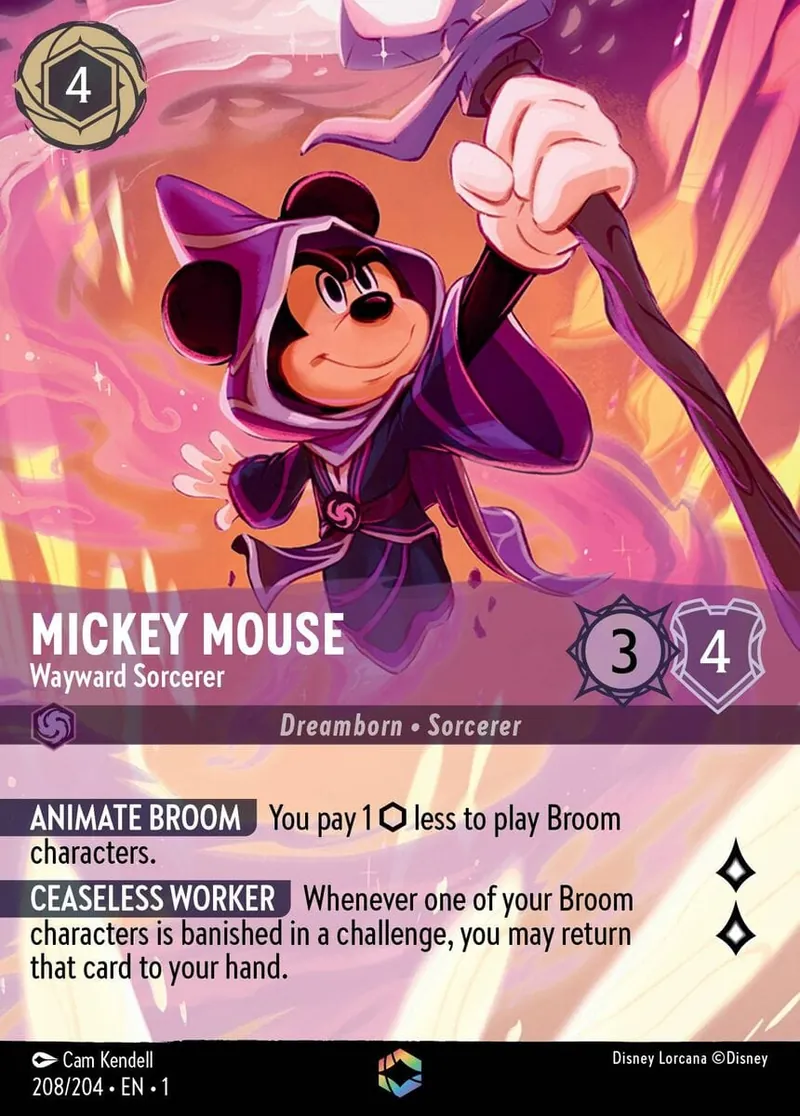
Submitting Disney Lorcana singles for third-party grading requires a distinct evaluation process compared to traditional foil trading cards. Lorcana’s top chase cards—specifically Enchanted rarities and D100 promotional releases—utilize a cold-foil printing technique over a distinct paper stock. While these cards offer striking visual appeal, the manufacturing process introduces subtle defects that raw-card buyers often overlook.
Before paying grading submission fees, raw card buyers and collectors should perform a systematic four-step visual audit.
The Inspection Lighting Setup
Casual room lighting hides the majority of surface defects on cold-foil cards. To properly inspect a Lorcana Enchanted card, use a 5000K daylight LED bulb or a dedicated jeweler’s desk light paired with a 10x magnification loupe.
Hold the card by its edges and tilt it slowly through a 180-degree arc under direct light. Cold foil reflects light differently than traditional rainbow foil or chrome substrate. Glare can obscure light surface scratches, so slowly rotating the card reveals thin hairline scratches etched into the clear gloss coat layer.
Spotting Factory Foil Lines and Roller Marks
The cold-foil process used in Lorcana sets involves pressing foil film onto specific areas of the printed card stock before applying a protective varnish. This method occasionally creates two distinct factory errors: horizontal print lines and roller depressions.
- Print lines appear as straight, perfectly horizontal or vertical seams running across the foiled artwork. They are non-recessed visual disruptions where the foil seam met during printing.
- Roller marks are shallow physical indentations caused by factory feed rollers during cutting and packaging.
Under direct lighting, tilt the card until the light reflects directly off the card artwork. If a line remains visible across both the foiled art and non-foiled text boxes, it is a structural paper defect, not a foil seam.
Factory roller lines on Lorcana cold foils often evade casual inspection but will cap a surface subgrade immediately.
Evaluating the Dark Reverse Edges
Disney Lorcana cards feature a dark navy blue reverse border. Dark back borders are notoriously unforgiving during grading because white paper stock shows through the slightest imperfection.
Inspect the back corners and top edge first. Factory cutting blades that are dull or running at high speeds can create micro-chipping along the back edge. This manifests as minute specks of exposed white paper fibers along the blue border. While a front image may look pristine, micro-flaking along two or more back edges typically drops a card from a gem mint grade down to an 8 or 9.
Measuring Borderless Centering
Evaluating centering on Lorcana Enchanted cards differs from standard cards because Enchanted cards feature full-art, borderless designs on the front.
To check front centering on an Enchanted card:
- Measure the distance from the outer edge of the left and right ink cost symbols to the physical edge of the card.
- Compare the spacing between the bottom text box frame and the bottom edge of the card stock.
- Rely on the reverse side for strict mathematical measurement. The navy blue border on the back provides clear 50/50 or 60/40 visual boundaries for grading submission standards.
Running a 60-second inspection with proper lighting and edge checking prevents unnecessary grading fees and ensures your raw singles match their market value.


