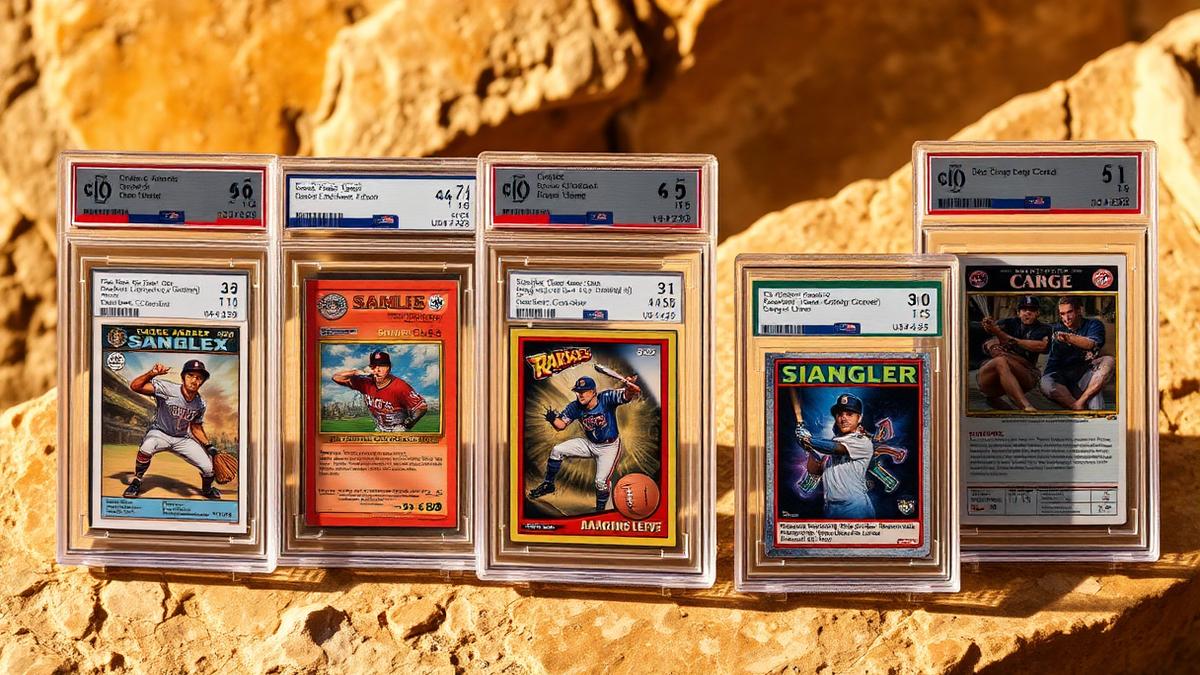

Submitting Magic: The Gathering cards for third-party grading requires a methodical inspection process. Because Magic has been printed across four decades on different paper stocks, card stocks, and finishes, condition standards shift dramatically between eras. Evaluating an early vintage card requires a different eye than assessing a modern collector booster exclusive.
Catching flaws on your own desk saves submission fees and prevents disappointing returns from grading companies like PSA, BGS, or CGC.
Measure Centering First
Centering is the quickest subgrade to verify. Measure the border width using a digital caliper or an acrylic grading ruler under direct light.
- Front Centering: For a card to earn a gem-mint 10 grade, major grading services typically require centering within 55/45 or 60/40 on the front face.
- Back Centering: Reverse sides usually allow slightly more tolerance, typically up to 75/25, though tighter centering is required for pristine or black-label designations.
- Vintage Considerations: Alpha cards feature distinct, heavily rounded corners with a 2-millimeter radius, compared to the standard 1-millimeter radius adopted in Beta and subsequent sets. Do not mistake standard Alpha corner cuts for trimming.
Inspect Edges and Corners Under Angled Light
Black borders showcase edge wear and corner whitening far more clearly than silver or white borders. Older core sets and modern borderless printings are particularly vulnerable to corner chipping directly from the factory pack.
Card edges tell the story of a card's cutting blade: rough factory knives leave micro-fraying, while mechanical shuffling creates distinct white flecks along the top and bottom borders.
Place the card against a dark mat under an adjustable desk lamp. Tilt the card slowly along its perimeter. Look for:
- White fiber exposure on the back corners, where the printed layer meets the paper core.
- Shearing along the borders caused by dull factory cutting blades.
- Micro-dents from handling or binder page edges.
Screen the Surface for Roller Lines and Scratching
Surface inspection requires oblique lighting. Hold the card so light reflects off the finish into your eye, then pivot the card slowly.
- Print Lines: Modern Magic sets frequently suffer from horizontal and vertical roller lines caused by printing presses. These indentations or faint pigment bands often go unnoticed under straight-down lighting but will drop a surface subgrade immediately.
- Foil Clouding and Scratching: Traditional foil finishes and specialty treatments scratch easily. Look for fine micro-scratches in the clear laminate layer and clouding caused by environmental exposure.
- Indentations: Check the back of the card carefully. Binder ring impressions, fingernail pinches, and pen transfer marks appear as shadowy depressions under angled light.
Address Curvature and Foil Warping
Curling is an ongoing reality of Magic foils due to humidity differentials between the card stock and the metallic film. While mild, uniform curvature generally does not reduce a grade inside a rigid slab, severe warping can cause the card to shift or sustain surface pressure damage during encapsulation.
Store candidates in penny sleeves inside tight-fitting semi-rigid holders (such as Cardboard Gold Card Savers) for several weeks before submission to flatten them safely without applying direct, damaging weight.
The Final Submission Filter
Before sealing an order, run every candidate card through a magnifying loupe (10x magnification is standard). If you spot any crease, surface indentation, or paper loss under magnification, eliminate the card from high-grade consideration immediately. Keeping an objective grading standard at home protects your submission budget and ensures your graded inventory meets market expectations.