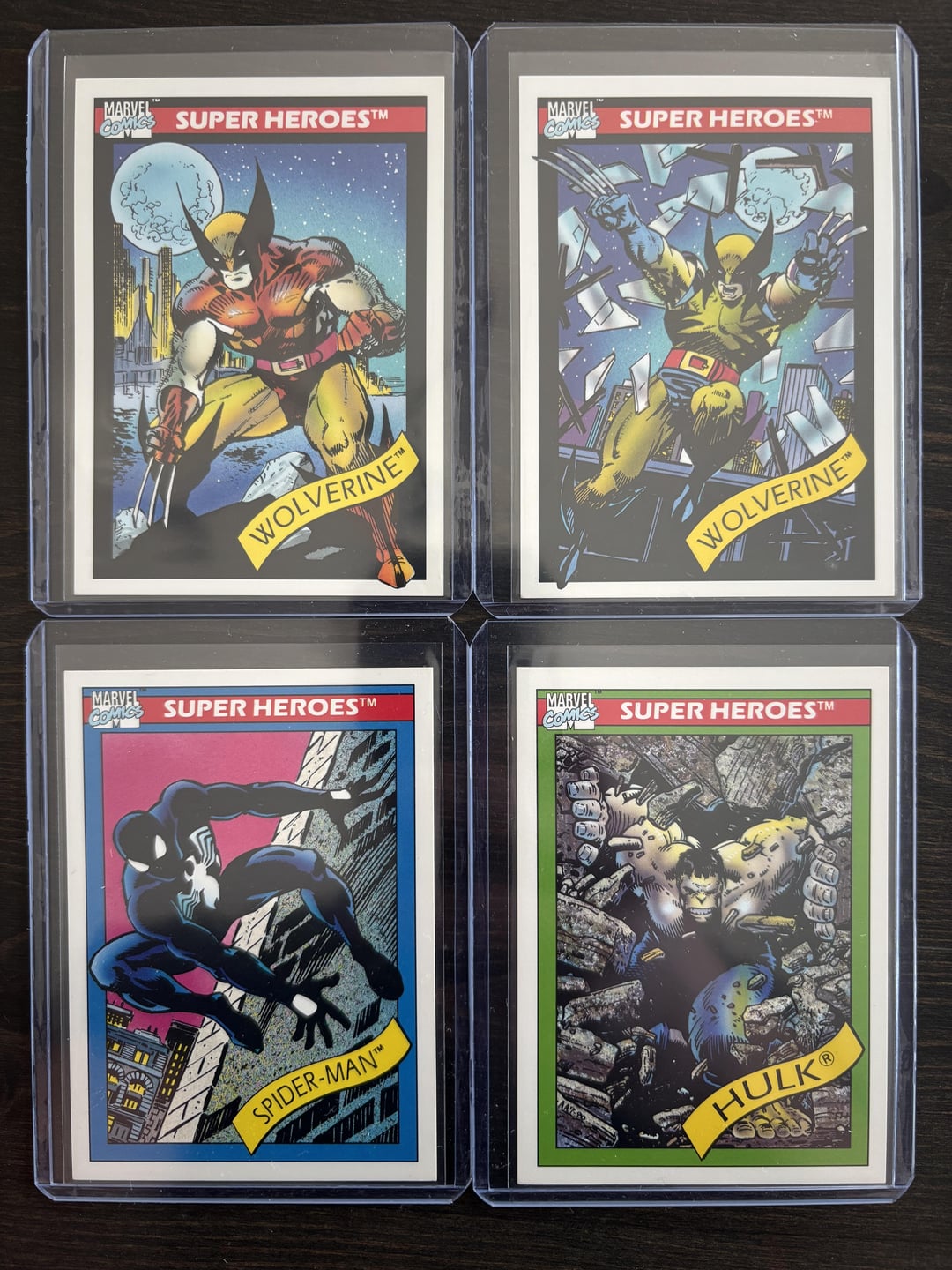
Non-sports cards present distinct physical characteristics compared to traditional trading card games and sports cards. Marvel sets feature a wide variety of card constructions, including high-gloss foil, clear acetate inserts, thick patch stock, and full-bleed artwork. Evaluating these cards for grading requires an inspection process tailored to non-sports manufacturing.
Before submitting Marvel cards to third-party grading services, collectors should systematically check four physical attributes: centering, surface integrity, edge wear, and corner sharpness.
Centering and Frame Mechanics
Evaluating centering on Marvel cards requires identifying consistent reference points across the card design. Standard sports cards often use symmetrical outer borders, making top-to-bottom and left-to-right ratios straightforward to measure. Marvel releases frequently utilize asymmetrical frames, character cutouts, or full-bleed art that extends to the card edge.
For cards with complete outer borders, measure the distance from the outer edge of the frame to the card border on opposing sides. A standard ruler or specialized card centering tool can determine if the image sits within standard 60/40 or 55/45 parameters.
For full-bleed designs without borders, centering shifts to the reverse side. The back of non-sports cards usually features a standardized frame, text box, or copyright line. Use these structural back elements to evaluate centering if the front artwork lacks defined borders.
Surface Checks and Light Angles
Foil finishes, chrome parallels, and high-gloss coatings are prone to factory defects. Common surface issues include horizontal roller lines, print spots, micro-scratching, and pitting in the foil layer.
Inspect surface quality under a dedicated point-source light, such as a focused LED flashlight, held at a 45-degree angle. Direct overhead room lighting masks shallow scratches and light print lines. Rotating the card slowly under direct angled light exposes surface flaws across the gloss layer.
Inspecting under angled LED light reveals micro-scratches that soft overhead lighting completely hides.
Acetate cards—transparent plastic inserts common in high-end Marvel sets—require extra care during surface checks. Acetate picks up static dust and fingerprint oils quickly. Always handle acetate inserts by the edges with microfiber gloves, and inspect for deep scratches or clouding embedded in the plastic material.
Edges, Corners, and Card Stock
Marvel sets often utilize dark, full-bleed backgrounds on both front and back surfaces. Dark borders make edge chipping immediately visible.
- **Foil Chipping**: Foil layers applied to card stock can flake along trimmed edges during factory cutting. Check the top and bottom borders under magnification for white paper showing through the foil.
- **Thick Stock Softness**: Patch, booklet, and high-end insert cards often exceed standard 35-pt card thickness. Multi-layer thick stock is vulnerable to soft or crushed corners caused by tight packaging or improper handling.
- **Die-Cut Intricacy**: Die-cut inserts feature complex cutlines that can show fraying or tiny paper burrs along the die edges.
Safe Storage for Grading Preparation
Proper storage prevents damage during inspection and transport. Standard 35-pt penny sleeves can damage the corners of thicker Marvel insert cards if forced inside. Use thick-gauge card sleeves designed for 55-pt to 130-pt card stock for thicker hits.
Cut a tiny diagonal slit in the top corner of the penny sleeve before inserting sensitive foil cards. This prevents the sleeve's top edge from catching and chipping a sharp card corner upon entry. Once sleeved, place the card into a rigid semi-rigid holder rather than a tight top-loader to ensure safe submission to grading companies.