Secondary market data for modern trading card games can be misleading if you take top-line figures at face value. Disney Lorcana presents several distinct valuation challenges: multiple foil finishes across identical card numbers, volatile competitive demand tied to organized play, and speculative spikes around alternative-art rarities.
Evaluating comparable sales—commonly called comps—is not simply a matter of checking the lowest active listing. Spotting an inflated price requires isolating verified sales data, understanding card variations, and filtering out temporary market noise.
Separate Foil Treatments and Parallel Finishes
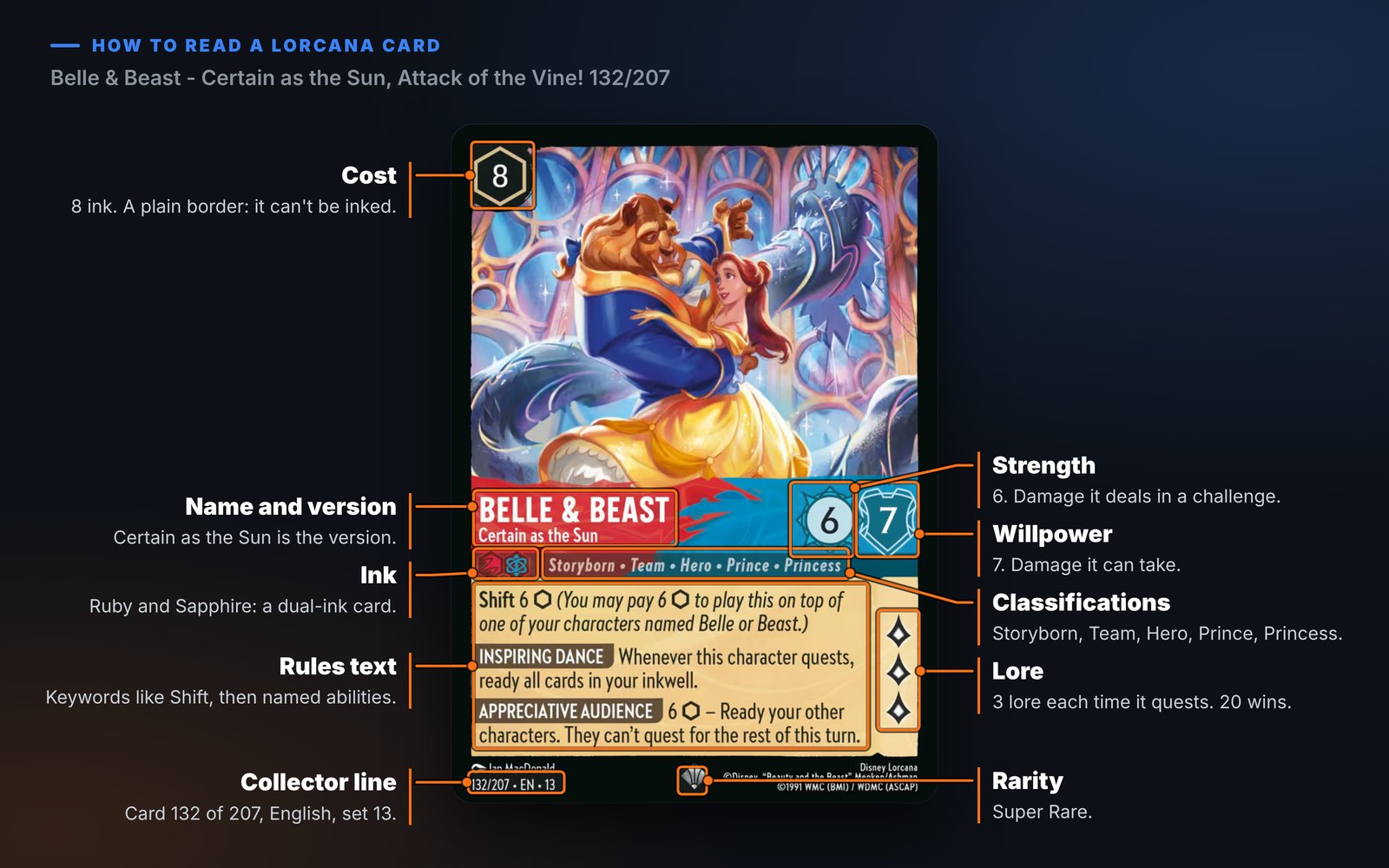
The most frequent error in Lorcana valuation stems from conflating standard non-foil prints with cold foil parallels or Enchanted rare variants. In primary sets, standard cards from Common through Legendary exist in both non-foil and cold foil formats within regular booster packs.
Aggregated pricing tools often misread automated scraped listings where a seller classified a non-foil card under a cold foil title, or vice versa. When reviewing settled market transactions:
- Match the exact card number and visual finish against the completed listing photo.
- Verify that the card is not an organized play promo or pin-set promo carrying identical artwork but a different collector number or foil stamp.
- Disregard listings with generic stock photos when establishing a baseline for higher-tier raw cards.
Never anchor your valuation to an active asking price. Unsold listings reflect seller optimism, not executed market clearing levels.
Filter Metagame Volatility
Competitive viability directly drives the pricing of Lorcana's Legendary and Super Rare singles. When a specific ink archetype wins a major Challenge event or regional tournament, secondary market volume for key engine cards spikes within 48 hours.
These surges frequently prompt sellers to raise asking prices dramatically while market inventory is temporarily low. To determine whether a price is sustainable, look back across settled transactions over the previous 30 to 60 days. If a card jumped significantly over a single weekend with no change in supply fundamentals, the price typically contracts as other players list surplus copies in the following weeks.
Distinguish between genuine structural scarcity and tournament-driven velocity before paying top-of-market rates.
Identify Artificial Outliers and Unpaid Listings
Not every completed auction represents real money changing hands. Unscrupulous actors occasionally exploit secondary platforms by placing high winning bids on their own listings to create an artificial benchmark for future sales.
To spot an engineered comp:
- Cross-reference completed auction sales with fixed-price settled sales on marketplace platforms that verify buyer payments.
- Check whether a card was relisted by the same seller shortly after an auction allegedly closed.
- Look for sudden price jumps on cards with high print supply that lack any competitive or aesthetic catalyst.
If one single sale sits 30 percent above the trailing seven-day average without a verified external cause, treat that transaction as an outlier and exclude it from your evaluation.
The Checklist Before Buying
Before submitting an offer or purchasing a raw Lorcana single:
- Check settled transaction history across at least two independent marketplace databases.
- Confirm whether the copy is raw Near Mint, lightly played, or professionally graded, adjusting expectations accordingly.
- Review centering and surface conditions on the actual card images, as Lorcana foils can be prone to factory print lines that depress realized resale value.
Disciplined filtering protects your capital and ensures you pay fair value rather than subsidizing someone else's speculative ceiling.