
The Fallacy of the Recent Sale
Evaluating market price on a sports card seems straightforward: check completed sales on secondary marketplaces, take the recent average, and place your bid or make an offer. In practice, blindly trusting a recent sale price is one of the easiest ways to overpay.
A sale price is only useful if the transaction actually settled and reflects an arm's-length exchange between an informed buyer and an informed seller. Before using a transaction as a benchmark comp, you need to filter out the noise.
Unpaid Sales and Shilled Listings
The most common trap in sports card pricing is the unpaid transaction. On major auction platforms, a high-priced sale can show up as completed even if the buyer never sent payment. Unscrupulous sellers sometimes use secondary accounts to bid up their own auctions or accept high Buy It Now listings, creating a fake historical comp to inflate the perceived market price.
To verify a comp, cross-reference multiple platforms and look at the trajectory of the card over 30 to 90 days. A single sale that sits significantly above the surrounding market average without a clear catalyst—such as an MVP award, a championship win, or a major trade—is almost always an outlier or an unpaid listing.
Decoding Best Offers and Grade Discrepancies
When analyzing accepted offers on marketplace listings, raw search results often display the original strike-through listing price rather than the actual price paid. Always use sales trackers that pull the true accepted offer amount, as an item listed for $1,000 might have settled for $600.
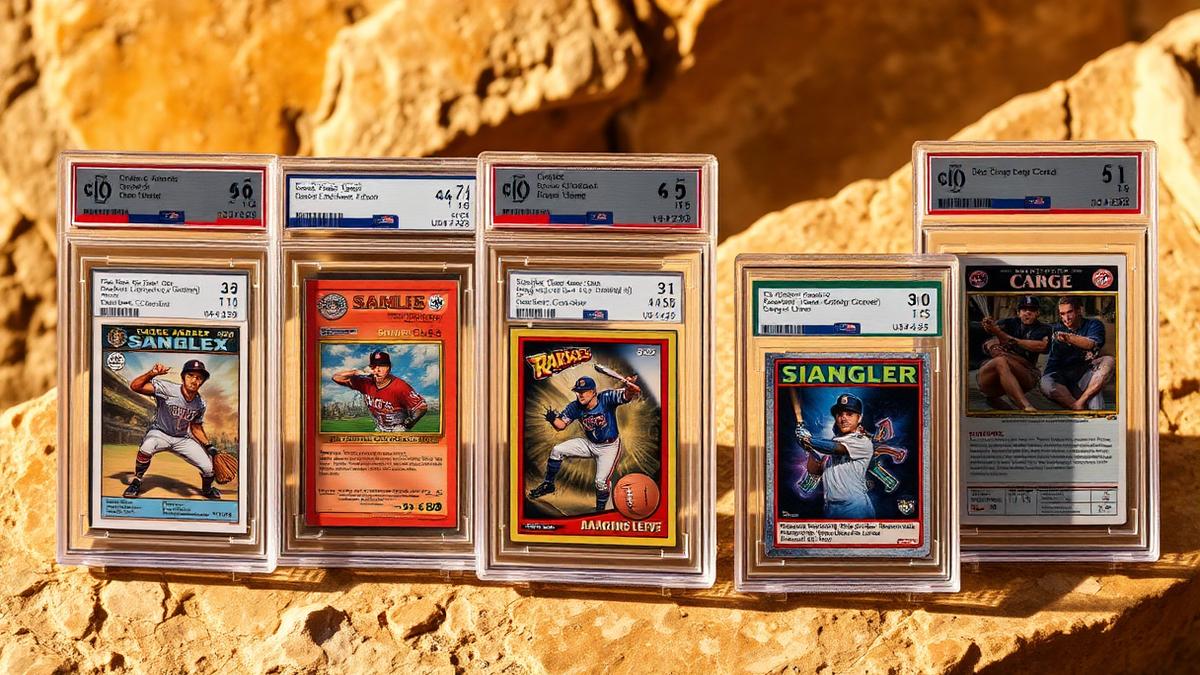
Grading company standards also create distinct pricing tiers that inexperienced buyers collapse into one. A PSA 10 Gem Mint often commands a premium over an SGC 10 or a BGS 9.5 Gem Mint, even though all three represent top-tier condition. Conversely, vintage cards graded in mid-tier slabs can vary dramatically based on eye appeal, centering, and print marks. Two cards carrying the exact same numeric grade do not always carry the same market value.
A single sale sitting well above the surrounding market without a clear catalyst is almost always an unpaid listing or an outlier.
Contextualizing Volatility and Timing
Sports cards experience distinct seasonal cycles driven by the actual athletic calendar. A star quarterback’s card prices typically peak during the first weeks of the NFL season or a playoff run, dropping during the spring and summer offseason.
When looking at comps for a current purchase, check when those sales occurred. A comp from four months ago during a playoff push is irrelevant when negotiating a purchase in the middle of the off-season. Always anchor your valuation to recent sales during similar market conditions.
A Checklist Before You Buy
Before submitting an offer or making a buy-it-now purchase, run through these basic checks:
- Filter out any single sale that deviates sharply from the established trendline without a sports-related catalyst.
- Verify that accepted offers reflect the actual settled price rather than the original list price.
- Match exact grading companies, subgrades, and card variations rather than comparing across different condition tiers.
- Adjust your expectation based on the sport’s seasonal calendar and recent player performance.
Learning to read comps critically transforms how you navigate marketplace listings, saving capital for genuine deals.