
Evaluating sports card prices before making a purchase requires analyzing recent market data rather than relying on list prices. Because sports card releases feature a wide array of parallels, serial numbers, print runs, and grading scale nuances, misreading comparable sales ("comps") can lead to overpaying.
Learning to spot artificial pricing relies on assessing completed transaction types, identifying true parallel matches, understanding grading firm differentials, and factoring in seasonal performance cycles.
Look Beyond the Asking Price
The most common error when evaluating a sports card's price is confusing active asking prices with settled market value. Sellers on open marketplaces frequently list items at high Buy It Now prices to test the market or anchor buyer expectations.
To find genuine comps, filter search tools specifically for sold and completed listings over the recent weeks. When examining completed listings, note whether a card sold via an unreserved auction or a fixed-price listing with an accepted offer. Unreserved auctions reflect immediate liquid demand on a given day. Fixed-price sales where a "Best Offer" was accepted can obscure the final price unless cross-referenced through dedicated sales tracking aggregators.
A high active listing price is a seller's wish list, not market value. True market consensus is revealed only by completed transactions.
Account for Card Parallels and Serial Numbers
Modern sports releases utilize complex color tiers, refractor finishes, and serial numbering. A primary pitfall is comparing two cards that look similar on surface inspection but sit in completely different scarcity tiers.
Always check the card number, foil stamping, and serial print run on the back or front of the card. A base card, an unnumbered refractor, a numbered parallel, and a one-of-one autograph carry drastically different pricing structures. When researching comps, verify that every transaction logged shares the exact same parallel name, print run, and card subset. Comparing an unnumbered base insert to a low-numbered parallel produces misleading market baselines.
Factor in Grading Companies and Subgrades
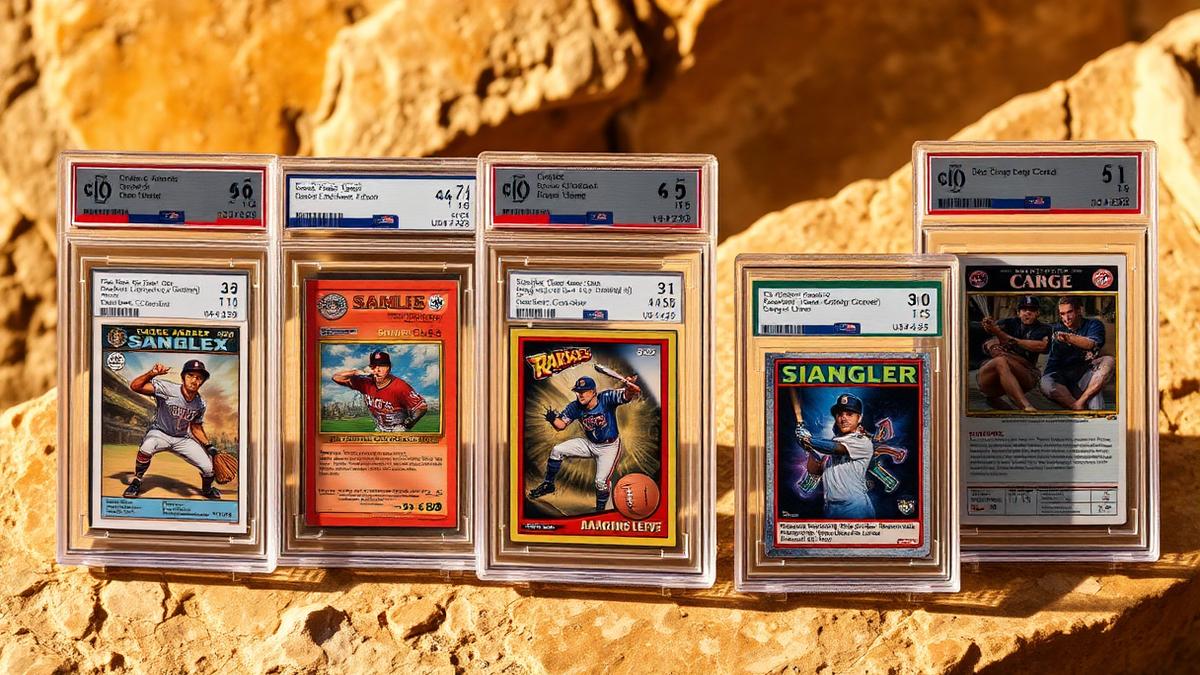
Grading significantly impacts market valuation in sports cards. A card encapsulated by PSA, BGS, or SGC will trade at different pricing tiers even if the numeric grade on the slab is identical.
Market consensus often assigns a premium to specific grades depending on the era and grading firm. For modern cards, a PSA 10 Gem Mint often trades differently than a BGS 9.5 Gem Mint, though BGS cards with pristine subgrades can alter that dynamic. Vintage sports cards often see strong collector demand in SGC holders. When pulling comps, avoid mixing different grading companies together into a single average price point. Compare PSA 10s strictly against recent PSA 10 sales, and review subgrades carefully on BGS slabs to ensure accurate parity.
Timing Sales Against In-Season Momentum
Unlike entertainment trading card games, sports card values fluctuate alongside real-world athletic performance, injuries, trades, and seasonal scheduling.
A card sold immediately after a player's breakout playoff performance will reflect a short-term demand spike. Pulling that sale as a baseline during the sport's off-season will distort your price expectation. When evaluating comps, check the transaction date against the sport's active calendar. Look for steady price trends across multiple weeks rather than relying on a single outlier transaction recorded during peak hype.