
In the sports card market, confusing asking price with market value is the fastest way to overpay. Secondary inventory moves on game outcomes, prospect promotion cycles, and shifting print-run tiers. Sellers often exploit this velocity by anchoring listings to obsolete spikes or mislabeling parallels to capture buyers acting on impulse.
Evaluating comparable sales—or comps—requires strict filtering. A raw list of recent sales records offers little protection unless you know how to adjust for negotiated transactions, condition risk, and serial variations.
The Asking Price Illusion and Accepted Offers
Active marketplace listings reflect seller aspiration, not cleared liquidity. An item listed for weeks at an elevated price does not establish a market baseline; it merely proves that buyers refuse to transact at that level. Any valuation must begin strictly with settled, paid transactions.
Even completed transaction data carries traps. Major auction venues routinely display a strikethrough price when a seller accepts a Best Offer. The displayed number is frequently the original list price, not the negotiated settlement figure. Unwary collectors log the higher figure into their valuation model, inadvertently inflating the comp.
Third-party market trackers and completed-sales scrapers expose the true settlement figure behind strikethrough sales. If an accepted offer cannot be verified through transaction scrapers, discard the sale from your data pool entirely rather than assuming the list price held.
Matching Parallels and Print Runs
Modern sports releases from Topps and Panini feature dozens of refractor and color parallels per player checklist. In standard marketplace thumbnails, an unnumbered Silver or Refractor can easily be mistaken for an unnumbered base card, or vice versa.
Before logging a comparable sale, verify three points on the card:
- The exact stamped serial number, confirming the total print tier.
- The specific border tint, background pattern, or refractor sheen described on the manufacturer checklist.
- The card numbering format on the reverse, separating base checklist prints from retail variations or insert subsets.
Sellers regularly title base cards with keywords like "Prizm" or "Chrome" to capture search volume. Comparing a base card purchase against a true Silver Prizm or Refractor comp guarantees an immediate paper loss.
The Raw Versus Graded Spread
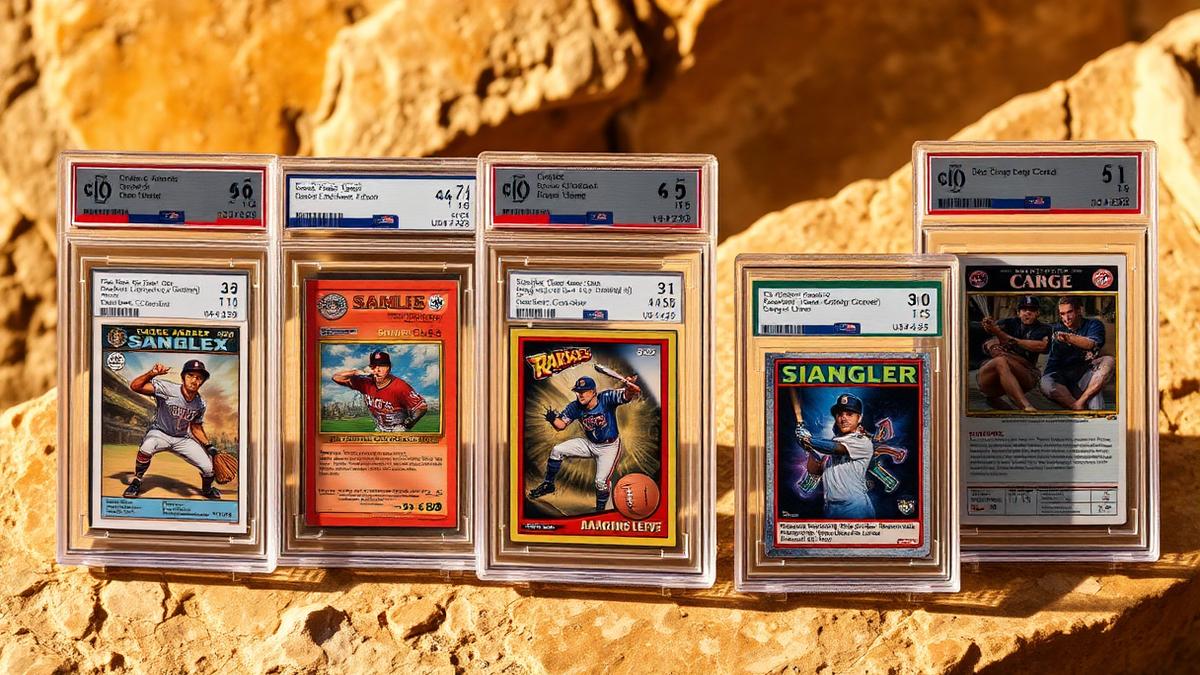
Another frequent misstep is pricing raw cards against low-tier graded slabs. Slabs graded as Mint (PSA 9 or equivalent) frequently trade near, or even below, the cost of raw cards during periods of high submission volume. This occurs because the market prices in the grading fee alongside the risk that a raw card will grade lower than Gem Mint.
Never buy a raw modern sports single at the price of a Gem Mint comp under the assumption that it will grade cleanly.
Manufacturing flaws such as print lines, centering drift, and rough foil edges are common out of fresh packs. Unless you have inspected the physical card under high-resolution magnification, evaluate raw sports cards at a defined discount relative to proven Gem Mint populations.
A Four-Step Comps Protocol
Before submitting an offer or placing a bid, run every potential acquisition through four verification steps:
- Restrict search filters exclusively to completed, settled auctions and verified sales within the past 30 to 60 days.
- Uncover the true clearing price on accepted offers using independent market sales tools.
- Audit the checklist and parallel tier against the physical photos, ignoring the listing title.
- Strip out off-field outlier events, such as short-term playoff hype or mid-season injury dips, to determine the underlying baseline.
Treating comps as a forensic process rather than a casual glance keeps capital protected and eliminates bad-faith pricing before transactions finalize.