Evaluating secondary market value in Yu-Gi-Oh! requires greater precision than in most other trading card games. Because Konami frequently rebinds iconic artwork across decades of sets, standard keyword searches often aggregate vastly different cards into a single pricing bucket. Identifying accurate comparable sales—or "comps"—means looking past card names and auditing the exact physical print.
Here is how to analyze Yu-Gi-Oh! comps correctly and avoid overpaying on secondary listings.
Dissecting Set Codes and Edition Stamps
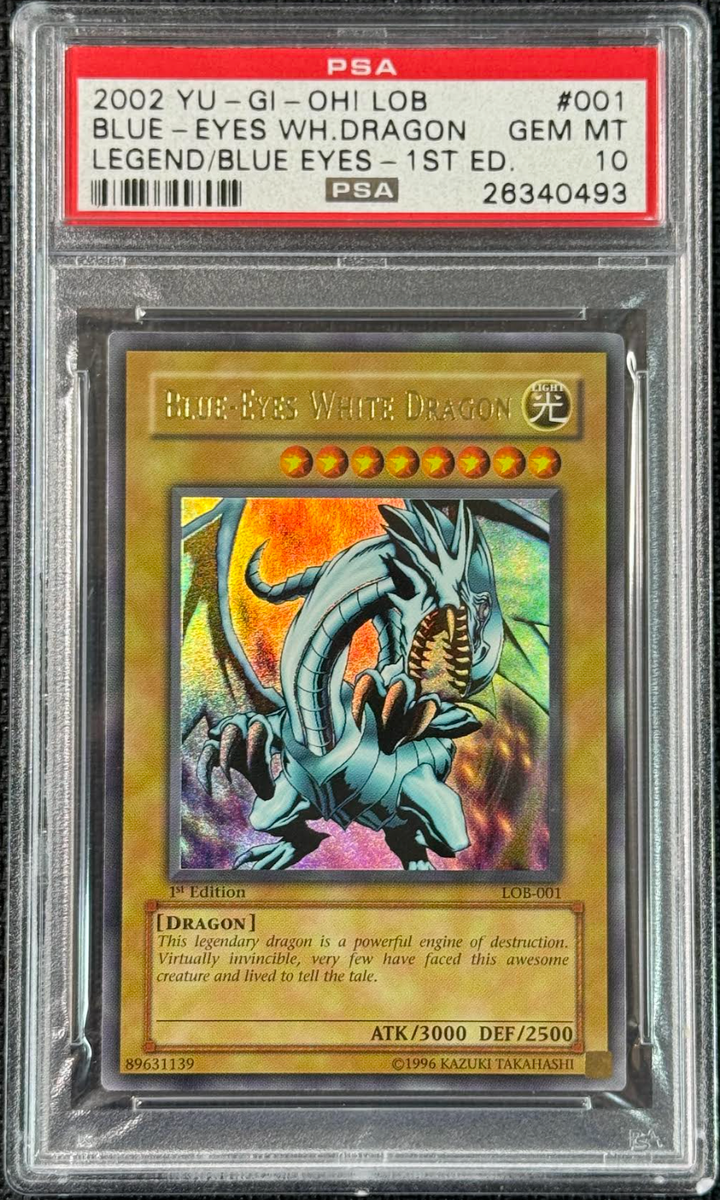
The most frequent mistake buyers make when comping Yu-Gi-Oh! cards is ignoring set codes. Printed on the right side of the card under the artwork frame, the set code defines the exact printing history of the card.
- Set Code Prefixes: An original North American release of Legend of Blue Eyes White Dragon carries the code `LOB-001`. A European release carries `LOB-E001`, while the 25th Anniversary reprint uses `LOB-EN001`. These minor variations represent massive price differences.
- Edition Marks: A 1st Edition stamp located under the bottom-left of the artwork image box demands a distinct premium over Unlimited Edition prints from the same era.
- Foiling Anomalies: Early sets feature subtle foiling differences, such as wavy versus glossy Secret Rares in early 1st Edition prints. Ensure the comp matches the specific print run.
When reviewing completed sales on secondary platforms, check the seller's photos to confirm the set code matches the target card. Never rely solely on the listing title, as sellers frequently mix up edition codes.
Accounting for Rarity Tiers and Regional Prints
Modern Yu-Gi-Oh! booster sets often issue the same card across multiple rarity tiers within the same set. A single card name can exist simultaneously as an Ultra Rare, Secret Rare, and Quarter Century Secret Rare.
"In Yu-Gi-Oh!, a single letter in a set code or a subtle foiling pattern can turn a five-dollar reprint into a five-figure grail."
Comping a Quarter Century Secret Rare using standard Secret Rare sales leads to severe mispricing. Furthermore, physical card stock varies by region. European printings feature noticeably darker ink saturation and deeper foil stamping than North American printings. High-end collectors often pay a premium for European prints. When reading comps for high-rarity singles, filter for regional print origin whenever possible.
Banlist Volatility and Meta Spikes
Yu-Gi-Oh! market prices are uniquely driven by tournament playability and Konami's Forbidden & Limited List. A card can appreciate several hundred percent overnight following a major tournament win or a favorable banlist announcement.
To avoid buying at the top of a temporary spike:
- Examine 30-Day and 90-Day Trends: Do not base a purchase on sales from the last 48 hours. Look at sales volume prior to the market shock to find the baseline value.
- Separate Competitive Liquidity from Collector Value: Meta-driven price spikes collapse rapidly once a card is reprinted or placed on the banlist. Vintage 1st Edition grails retain value regardless of competitive utility; modern high-rarity meta cards do not.
Verifying Settled Sales
Always base comps on completed, settled transactions. On eBay, filter by completed sales rather than active listings, and use historical transaction databases to reveal accepted Best Offers. A listed price with an accepted lower offer represents the lower settlement price, not the original asking figure. By systematically filtering by set code, rarity tier, regional print, and sale date, you eliminate bad data and secure cards at genuine market value.