In the early 1990s, comic book trading cards were straightforward adaptations. Sets like Impel's 1990 Marvel Universe used existing line art clipped from published comic books, recolored for card dimensions, and set inside bright card stock borders. While popular with collectors tracking character stats and debut appearances, the cards looked identical to the monthly newsstand books.
In 1992, SkyBox set out to establish a premium card tier. Instead of licensing existing interior panels or cover art, the company hired fantasy illustrator Joe Jusko to paint every single card in a 100-card set from scratch. The result was 1992 Marvel Masterpieces.
One Hundred Original Canvases
Jusko was already well-known in fantasy and comic circles for his magazine covers and painted posters. But producing 100 distinct gouache and acrylic paintings on a tight production schedule posed an immense physical and technical challenge.
Each original painting was executed on 15 by 20 inch heavy board. Jusko approached each character with classical anatomy and dramatic chiaroscuro lighting, treating B-list villains with the same artistic weight as main staples like Spider-Man, Captain America, and Wolverine.
"Jusko treated B-list villains with the same artistic weight as main staples like Spider-Man, Captain America, and Wolverine."
Working almost around the clock for months, Jusko completed the entire set in under a year. Cards like the crouching Spider-Man (#87) and the battle-damaged Wolverine (#100) instantly defined character iconography for an entire generation of collectors. The painted originals allowed SkyBox to print the cards with full-bleed edges, eliminating traditional card borders entirely.
Shifting the Industry Standard
The release of 1992 Marvel Masterpieces fundamentally altered non-sports trading card production. The set proved that collectors would buy trading cards not just for character checklists or trivia, but as miniature art prints.
The success of the 1992 release prompted rival manufacturers to follow suit. Fleer and SkyBox expanded the painted card format across subsequent Marvel Masterpieces years, hiring artists like the Hildebrandt brothers in 1994 and Boris Vallejo and Julie Bell in 1995. The painted aesthetic became the gold standard for high-end comic releases throughout the decade.
Returning to the Canvas
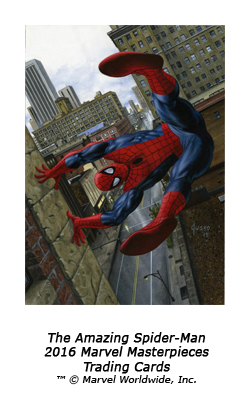
Jusko's connection to the franchise did not end in 1992. Decades later, Upper Deck brought Jusko back to illustrate the 2016 Marvel Masterpieces set. Once again, he painted the entire base set from scratch, taking over two years to complete 135 new original paintings.
Today, the original 1992 set remains a benchmark for comic card design. It proved that a trading card could serve as a canvas rather than just a promotional product, cementing Jusko's work as the blueprint for comic art on card stock.