Beyond Animated Stills
When Ravensburger announced Disney Lorcana ahead of its 2023 debut set *The First Chapter*, collectors wondered how classic Disney characters would translate to a modern trading card game format. Adapting decades of hand-drawn animation, CGI models, and varied artistic eras into a visually cohesive card game presented a clear design challenge.
Rather than reusing film stills or existing marketing art, Ravensburger commissioned original illustrations for every card. To ensure the game felt unified while allowing for radical reimagining of classic characters, artists and art directors established a strict visual taxonomy based on character ink types: Storyborn, Dreamborn, and Floodborn.
Defining the Three Character Classifications
Artist Nicholas Kole, a veteran character designer known for work across major animation and video game properties, was among the early illustrators brought on to shape Lorcana's visual language. Kole and the visual development team helped establish guidelines for how Disney figures transform across the game's narrative spectrum.
Storyborn glimmers stick closest to original Disney film presentations. These cards depict characters in their canonical outfits and settings, matching the traditional animation styles fans recognize. Cards like *Mickey Mouse - Steamboat Hero* ground the trading card game in classic film heritage.
Dreamborn glimmers represent imaginative shifts. Illustrators alter character roles, equipment, and personality traits while maintaining core character silhouette and face structure. A classic example from *The First Chapter* is *Stitch - Rock Star*, where the character retains his recognizable alien facial structure while equipped with an electric guitar and modern stage attire.
Floodborn glimmers represent the most radical visual departures. In Lorcana lore, Floodborn characters are altered by a flood of magical ink within the Great Illuminary. Visual rules dictate that Floodborn illustrations display tangible ink effects, altered scale, or dramatic physical transformations—such as *Tinker Bell - Giant Fairy*, illustrated by Grace Tran, where the pixie is depicted at massive scale towering over a landscape.
Hand-Drawn DNA in a Digital Workflow
"The goal was to make classic characters feel both immediately recognizable and freshly redesigned for a card format."
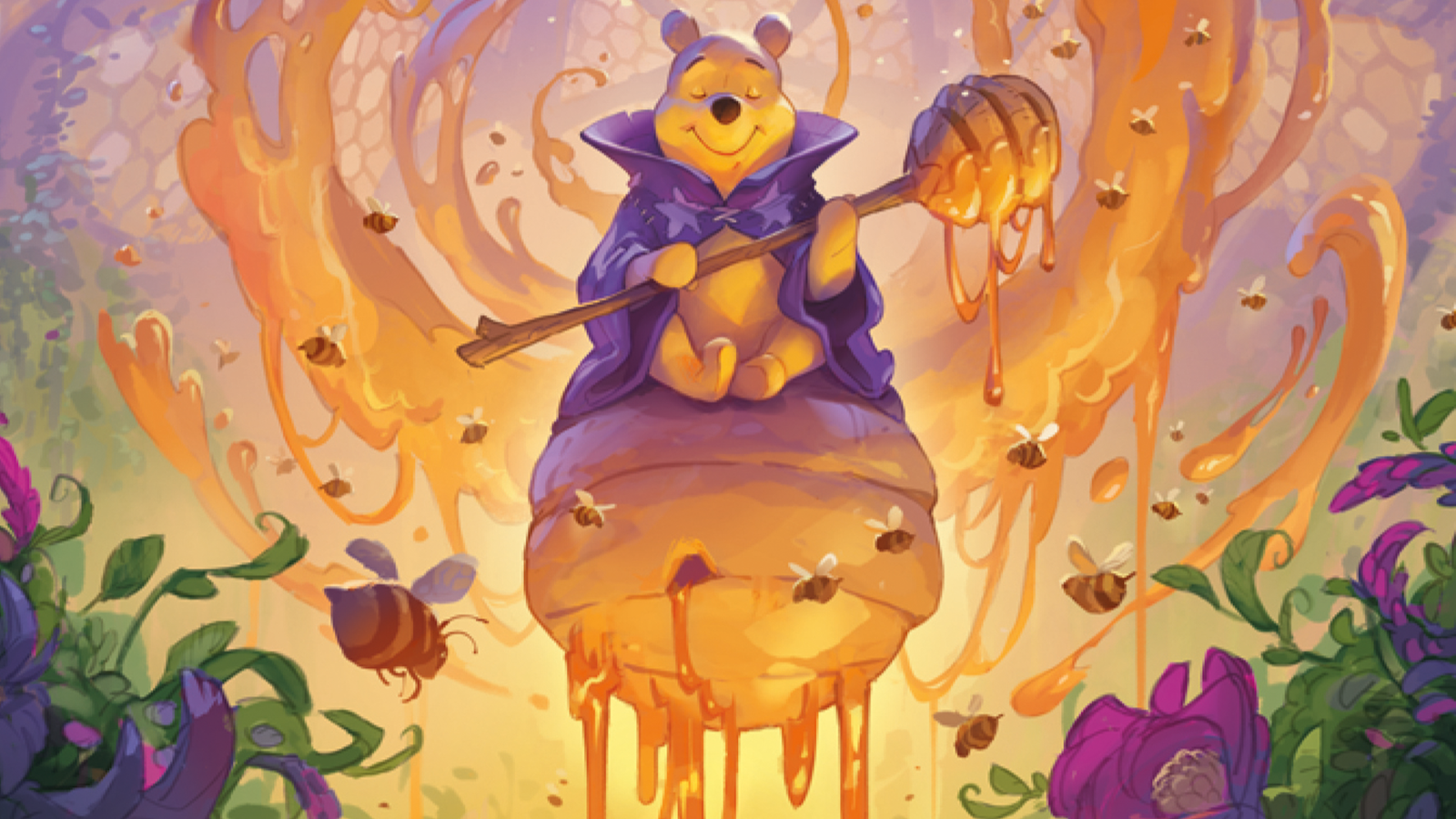
While most modern TCG artwork relies heavily on digital rendering pipelines, Lorcana artists were instructed to preserve line quality and expressive posing reminiscent of Disney animation drawing boards. Lines are kept clean, color palettes are keyed to match original film ink-and-paint references, and silhouette clarity takes priority so cards remain readable across a table.
Artists produced concept sketches before final card paintings were approved by Disney visual teams. Details down to the magical ink swirls on high-rarity Enchanted cards follow structured art direction guidelines.
A Lasting Visual Standard
This systematic approach to card illustration prevented Lorcana from feeling like a fragmented compilation of Disney screen captures. By giving artists room to push character designs into alternative roles while adhering to Storyborn, Dreamborn, and Floodborn visual rules, Ravensburger established an identity distinct from other licensed card games on the market.
For collectors, recognizing these visual cues adds depth to set evaluation. A card is not just a high-rarity hit; it is a specific artistic interpretation built on a structured visual pipeline designed to honor Disney animation history.