When Ravensburger debuted Disney Lorcana, the visual aesthetic had to bridge nearly a century of Disney animation history with the functional demands of a modern tabletop trading card game. Central to establishing that balance was character illustrator and visual development artist Nicholas Kole.
Kole came to the project with extensive experience in video game character design, having worked on major titles including Crash Bandicoot 4: It’s About Time and Spyro Reignited Trilogy. That background in shape language, 3D volume, and readable silhouettes directly informed how he rendered classic Disney characters for cardstock.
Translating Animation to Card Frames
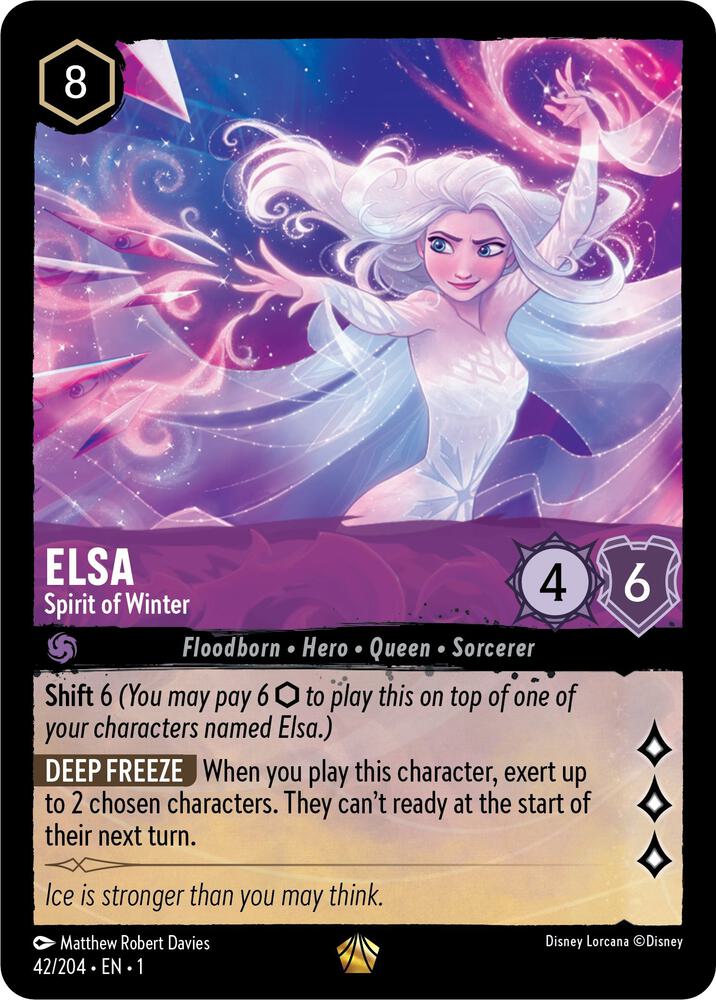
Illustrating cards for Disney Lorcana required adapting screen characters into static, tight card frames. In video game visual development, character silhouettes must remain instantly recognizable at varying distances and camera angles. Kole applied those exact principles to cards such as Elsa - Spirit of Winter and Mickey Mouse - Wayward Sorcerer.
Rather than copying static model sheets or animation frames, Kole constructed dynamic poses anchored by heavy value separation. The goal was to ensure the character's pose, expression, and magic were readable even when viewed from across a playmat.
Light, Volume, and Ink Identity
Unlike traditional Disney animation cell art, Lorcana art relies heavily on directional light sources and volumetric ambient effects to convey magic. For Elsa - Spirit of Winter, Kole used sharp rim lighting and cool blue visual contrast to separate the figure from the dark background elements, giving the illustration a sense of physical weight and cold atmosphere.
Card art must convey character action and personality instantly, using high-contrast lighting to remain readable across a table.
The visual approach also supported gameplay readability. Ravensburger's art direction required cards to visually reflect their lore classifications and color ink types. Storyborn, Dreamborn, and Floodborn versions of characters each demanded distinct artistic treatments while remaining faithful to Disney’s character design standards.
Establishing the Baseline Aesthetic
Kole’s contributions to the initial set helped establish the visual language for Lorcana’s debut. By applying video game production techniques—such as strong volumetric rim lighting and simplified key silhouettes—the art team demonstrated how classic animated characters could be adapted into high-contrast trading card illustrations without losing their original character identity.