
The 2003 Terminology Shift
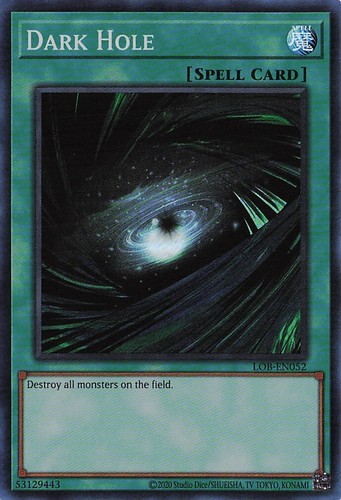
When Konami launched the Yu-Gi-Oh! Trading Card Game in North America in early 2002, the game's core card types were defined as Monsters, Traps, and Magic Cards. Green-bordered cards like Dark Hole, Raigeki, and Change of Heart carried the header text "MAGIC CARD" across the top.
By late 2003, every mention of "Magic Card" disappeared from official Yu-Gi-Oh! products. Konami replaced the phrase with "Spell Card" across its rulebooks, card frames, and errata text. The reason was legal rather than mechanical.
Wizards of the Coast, the publisher of Magic: The Gathering, held established trademark protections over trading card branding using the word "Magic." To avoid potential intellectual property infringement and clarify market separation, Konami executed a global terminology shift across all English-language releases.
Renaming Booster Sets and Card Headers
The change required physical updates to existing inventory and future print runs. The most prominent structural change occurred with the game's third English booster pack, originally released in September 2002 as Magic Ruler.
Following the trademark adjustment, Konami renamed the set to Spell Ruler. Sealed booster boxes, packs, and database listings were updated to reflect the new title. The card code prefix remained "SRL," preserving set tracking across database registries while removing the word "Magic" from retail shelves.
On individual cards, the top text line was permanently altered. Cards printed during the 2002 launch and early 2003 runs feature "MAGIC CARD" in bold, capitalized text alongside the iconic green color scheme. Printings produced from late 2003 onward carry "SPELL CARD" instead.
The renaming of Magic Ruler to Spell Ruler remains one of the few instances where a major TCG altered a set name post-release.
Spotting Early Print Runs
For modern collectors, this historical pivot serves as an essential authentication and verification tool when inspecting vintage Yu-Gi-Oh! cards.
Cards from early sets—including Legend of Blue Eyes White Dragon, Metal Raiders, and Spell Ruler—exist in both "Magic Card" and "Spell Card" configurations. First Edition printings from 2002 exclusively feature the original "MAGIC CARD" header. Unlimited printings produced immediately following the initial run also maintain the "MAGIC CARD" designation.
Later Unlimited runs, including those printed for reprint sets and boxed collections in the mid-2000s, were updated to the "SPELL CARD" frame. This distinct variation allows collectors to differentiate between early 2002–2003 Unlimited printings and later reprint iterations, even when the set codes and foil treatments appear identical.
The transition extended to card text as well. Early Monster and Trap effects that referenced target "Magic Cards" received errata in subsequent printings to reference "Spell Cards." While the rules remained identical in gameplay, the physical history of the TCG remains permanently split between the two eras.


