Three Weeks of Post-Launch Settlement
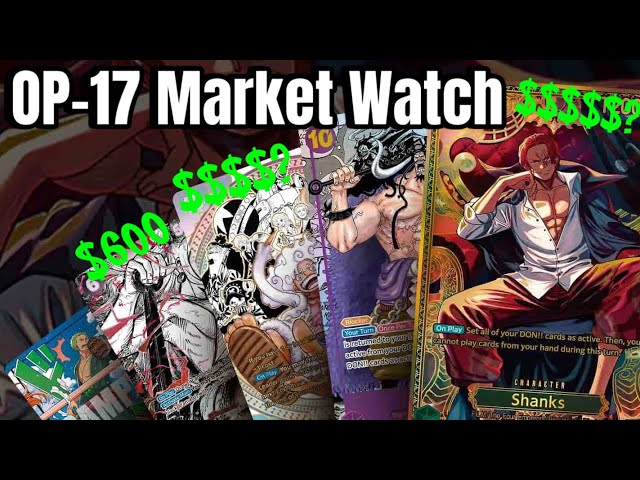
Three weeks have passed since Bandai officially released OP-17, *The World's Strongest Warriors*, on August 28, 2026. The expansion introduced major thematic focus on the Elbaf arc and the Four Emperors, marking another high-profile entry in the One Piece Card Game ecosystem.
Unlike older One Piece expansions that experienced months of lag between Japanese releases and localized Western drops, OP-17 launched in a synchronized global release window. Bandai’s decision to ship English allocation in step with Japan meant that secondary market price discovery across all major regions began simultaneously on release day.
As product clears initial local game store allocation and presale fulfillment finishes, the market naturally transitions from initial release momentum to structured secondary settlement. Collectors evaluating singles and sealed product must navigate how simultaneous global availability impacts short-term market liquidity and long-term holding dynamics.
Key Vectors for Collectors to Watch
With the initial launch window now concluding, secondary market activity moves into its standard settlement phase. Collectors tracking OP-17 should focus on three primary indicators over the coming weeks:
- Alternate art stability: High-rarity chase cards, particularly top character alternate arts and high-tier insert variants, typically undergo significant price fluctuations during the first three weeks after launch. Monitoring whether key single cards establish consistent price floors will signal organic collector demand versus temporary speculative pressure.
- Sealed booster box supply: Sealed booster boxes often experience notable shifts in secondary availability once first-wave store allocations sell through. Observing store restock cadences and secondary distributor fulfillment provides critical insight into whether sealed product remains widely accessible or begins to tighten across retail channels.
- Competitive tournament integration: Thematic cards centered around the Elbaf arc and the Four Emperors introduce new strategic options into tournament play. As competitive event results emerge, player demand frequently drives secondary volume for key play-set singles, separating player utility from pure collectible interest.
When evaluating singles after a major expansion launch, distinguishing between player-driven demand and collector-driven scarcity is essential. Tournament staples may experience rapid short-term liquidity, whereas rare character variants tend to settle according to long-term set completion interest.
Global release alignment creates immediate localized liquidity, but true price discovery requires systematic observation through the post-launch settlement window.
The Impact of Simultaneous Global Allocation
The simultaneous worldwide launch of OP-17 fundamentally altered the secondary market dynamics that previously defined One Piece card collecting. In earlier release cycles, Western collectors closely monitored Japanese card values for months to gauge card performance, hit rates, and character demand prior to English availability.
With synchronized release timing, cross-regional price arbitrage diminishes far more rapidly. English singles enter secondary circulation immediately, eliminating the multi-month buffer that once allowed speculative presale pricing to set market expectations. As a result, price settlement occurs on a compressed timeline, accelerating the pace at which single card values stabilize.
For collectors navigating the post-launch environment, patience remains critical. Tracking completed sales across verified secondary platforms, monitoring tournament lists, and watching allocation patterns will provide the clearest picture of how OP-17 matures over the coming weeks.