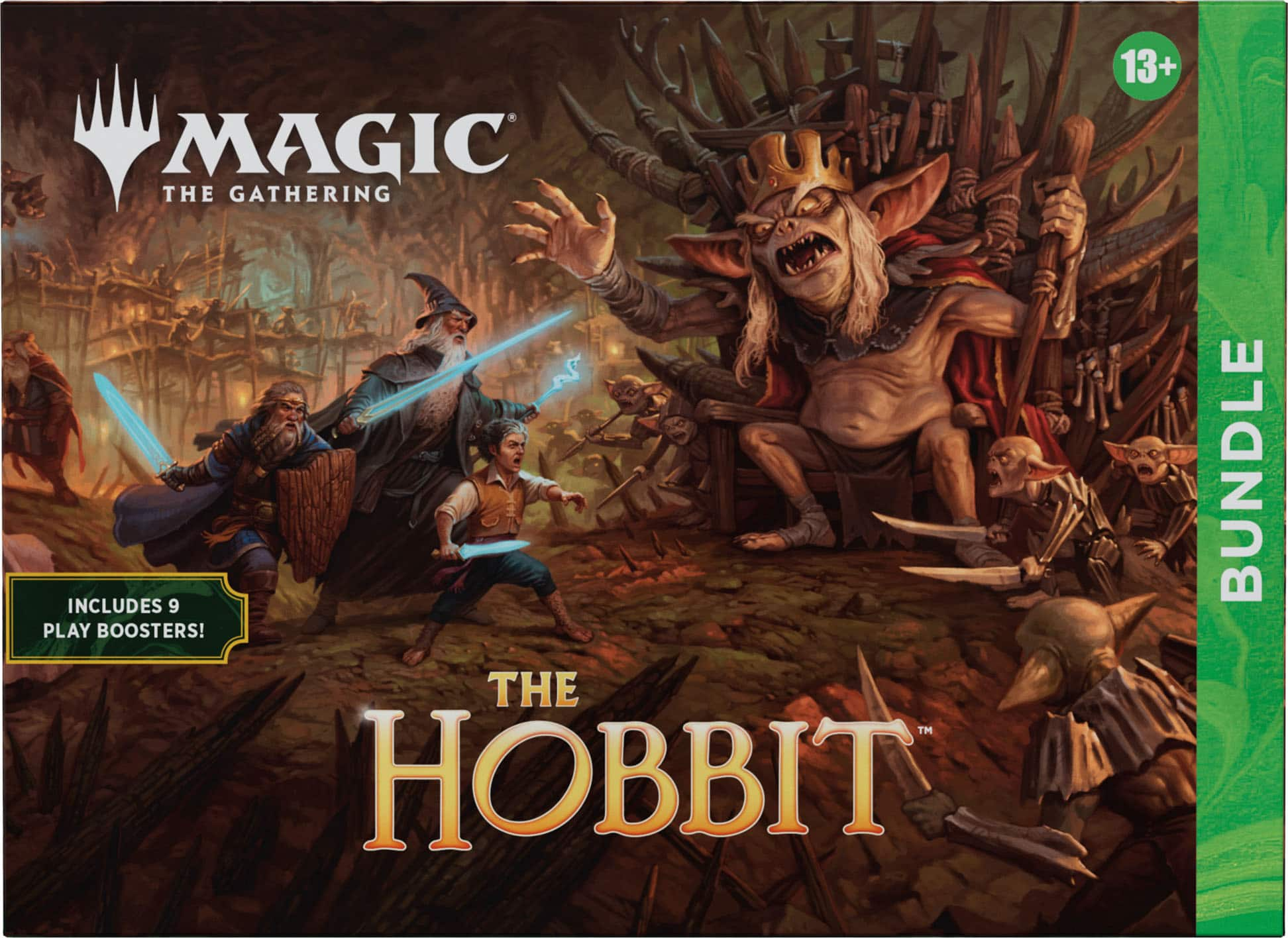
Entering November 2026, secondary market observation for Magic: The Gathering centers on the settlement curve of Universes Beyond releases. With August 14 marking the tabletop and MTG Arena launch of The Hobbit, followed by the September 4 arrival of its Gift Bundle, the market is now navigating the tail end of its primary post-release discovery phase. For collectors and store owners, tracking how these staggered products settle provides critical insight into current allocation and pricing behavior.
When a major Universes Beyond set lands simultaneously across tabletop retail and MTG Arena, physical market momentum faces a unique pacing structure. Digital accessibility provides instantaneous testing environments for new mechanics, characters, and constructed formats. In earlier eras of the trading card market, organic paper discovery took weeks to influence singles pricing. Today, high-volume digital play compresses that initial evaluation phase into days, directly dictating early paper liquidity before physical inventory is fully distributed.
Staggered SKUs and Secondary Velocity
The gap between the August 14 baseline release and the September 4 Gift Bundle rollout exemplifies modern product scheduling. Secondary singles rarely find stable price floors during initial prerelease or launch-weekend box openings. Instead, the secondary supply undergoes a secondary wave of pressure when supplementary SKUs arrive.
Gift Bundles typically inject a concentrated burst of sealed product, specialty boosters, and fixed components into retail ecosystems. Because these products land roughly three weeks after primary booster boxes have been cracked for launch-day singles, they often interrupt early attempts at price stabilization. Collectors analyzing trade values or picking up set staples must evaluate whether post-bundle inventory has been fully absorbed by retail buyers or if localized backlogs remain in distribution channels.
The secondary market no longer absorbs a set in a single weekend; staggered SKUs extend price discovery well past release.
Universes Beyond Market Mechanics
Universes Beyond products operate under different long-term liquidity rules than mainline Premier sets. The appeal relies heavily on intellectual property crossover demand alongside traditional gameplay utility. Characters and events from The Hobbit attract casual buyers, franchise enthusiasts, and traditional Commander deckbuilders simultaneously.
This broad audience creates split demand curves:
- Game-piece demand: Cards with immediate utility in competitive or Commander formats experience rapid early turnover driven by digital format results.
- Character-driven demand: Iconic named figures and lore-specific artifacts maintain steady retail absorption independent of competitive playability.
- Sealed product holding patterns: Premium configurations like Gift Bundles face different holding pressures as sealed collectors balance immediate singles value against long-term unsealed supply scarcity.
What Collectors Should Watch
With November underway, the market has cleared the immediate noise of launch-quarter box openings. Collectors evaluating the late-autumn secondary environment should focus on three specific market signals:
First, monitor the clearing rate of remaining sealed inventory across independent game stores. When Gift Bundle allocations move off shelves without requiring promotional discounting, singles pricing across the broader set tends to find a durable floor.
Second, observe digital format divergence. As MTG Arena formats evolve, cards that perform well in digital play often see sudden paper spikes, while physical Commander staples steadily absorb base printings over longer periods.
Finally, assess the stabilization of non-foil base copies against premium treatments. In sets driven by literary and character IP, baseline versions typically serve the active player base, while collector demand concentrates heavily on top-tier specialty variants. Tracking where that divergence stabilizes helps identify genuine baseline demand heading into the winter market.