
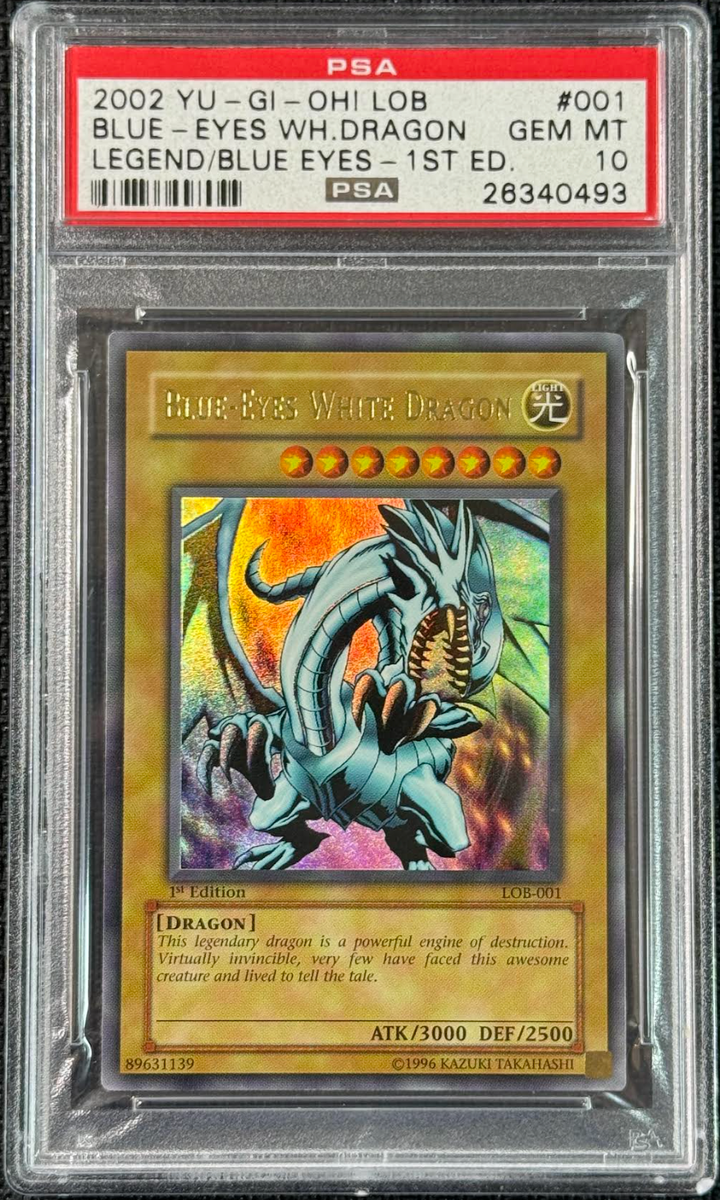
Vintage Iconic Cards Command Record Realizations
The Yu-Gi-Oh! secondary market is displaying a sharp divergence between high-grade vintage grails and modern playable singles. While modern cards experience price contractions following initial release windows, top-tier vintage cards in gem-mint condition continue to command strong prices.
A recent market update cited historic sales figures for premier vintage monsters preserved in PSA 10 slabs. A Blue-Eyes White Dragon in a PSA 10 grade realized $72,000. Dark Magician in a PSA 10 grade reached $51,350, while Red-Eyes Black Dragon in PSA 10 sold for $41,645. High-grade examples of Dark Magician Girl also posted strong realizations. These transactions highlight persistent demand for original vintage printings in pristine condition, establishing a clear ceiling for early Yu-Gi-Oh! grails.
Iconic vintage monsters in gem mint condition continue to function as market anchors while modern singles navigate rapid supply shifts.
Modern Supply Shifts and Secondary Recalibrations
In contrast to the stability of vintage grails, modern Yu-Gi-Oh! singles face noticeable downward price pressure shortly after set releases. Recent secondary market tracking covering weekly price movements shows that several modern competitive staples are dropping in value faster than in previous quarters.
Supply shifts, tournament list adjustments, and secondary market listings contribute to these rapid recalibrations. Initial presale pricing often inflates modern single values during set launch weeks. Once sealed product opening peaks and secondary market inventory saturates platforms like TCGplayer, single prices compress toward baseline market numbers. Collectors focused on modern singles face elevated volatility compared to those holding slabbed vintage originals.
Strategic Factors Driving Market Divergence
This split in market behavior reflects fundamental differences in buyer intent across the Yu-Gi-Oh! franchise:
- Vintage grails operate primarily as collectible assets. Supply in PSA 10 condition is strictly fixed, shielding these cards from reprint cycles or tournament rule changes.
- Modern singles derive value primarily from tournament playability. Because Konami regularly updates forbidden and limited lists and introduces reprint sets, modern card values fluctuate based on competitive utility rather than long-term scarcity.
What Yu-Gi-Oh! Collectors Should Watch
As the market settles through mid-October 2026, buyers and sellers must distinguish between player demand and collector scarcity.
- Track vintage grading census numbers. High-grade population reports on original sets dictate whether price increases are sustainable or temporary spikes.
- Monitor initial box opening volume for new expansion releases such as Chaos Origins. Elevated opening volume typically accelerates price compression on modern raw singles.
- Evaluate secondary market settlement windows. Modern singles often require three to four weeks post-launch to establish stable market price floors.
While vintage grails continue setting high benchmarks, modern collectors should exercise patience when purchasing raw singles during launch windows.


