Small-Format Inspection Basics
Evaluating Yu-Gi-Oh! cards for professional grading requires a process adapted to the game's unique physical format. Unlike standard-size trading card games, Yu-Gi-Oh! uses Japanese small-size cardstock measuring 59 by 86 millimeters.
Because the overall surface area is smaller, physical flaws take up a larger relative percentage of the card face. A minor dent or edge nick that might pass unnoticed on a larger card is immediately visible under third-party grading standards.
Surface Examination and Foil Stamping
Yu-Gi-Oh! relies heavily on complex foil treatments, including Secret Rares, Starlight Rares, and Quarter Century Secret Rares. High-rarity cards feature layered foil structures and metallic name stamping that present distinct inspection challenges.
- Check for foil scratching: Place the card under a direct, high-lumen LED light and tilt it slowly at a 45-degree angle. Look for horizontal factory print lines and fine hairline scratches across the foil surface.
- Inspect name stamping: Examine the recessed lettering of foil titles. Look for foil flaking, off-center name stamping shifts, or excess foil bleeding outside the debossed lettering.
- Watch for factory wax: Freshly opened packs frequently leave thin factory wax or oil residue on the surface. Gently wipe the card with a clean microfiber cloth before grading submission to prevent grading penalties.
Back Edges and Corner Wear
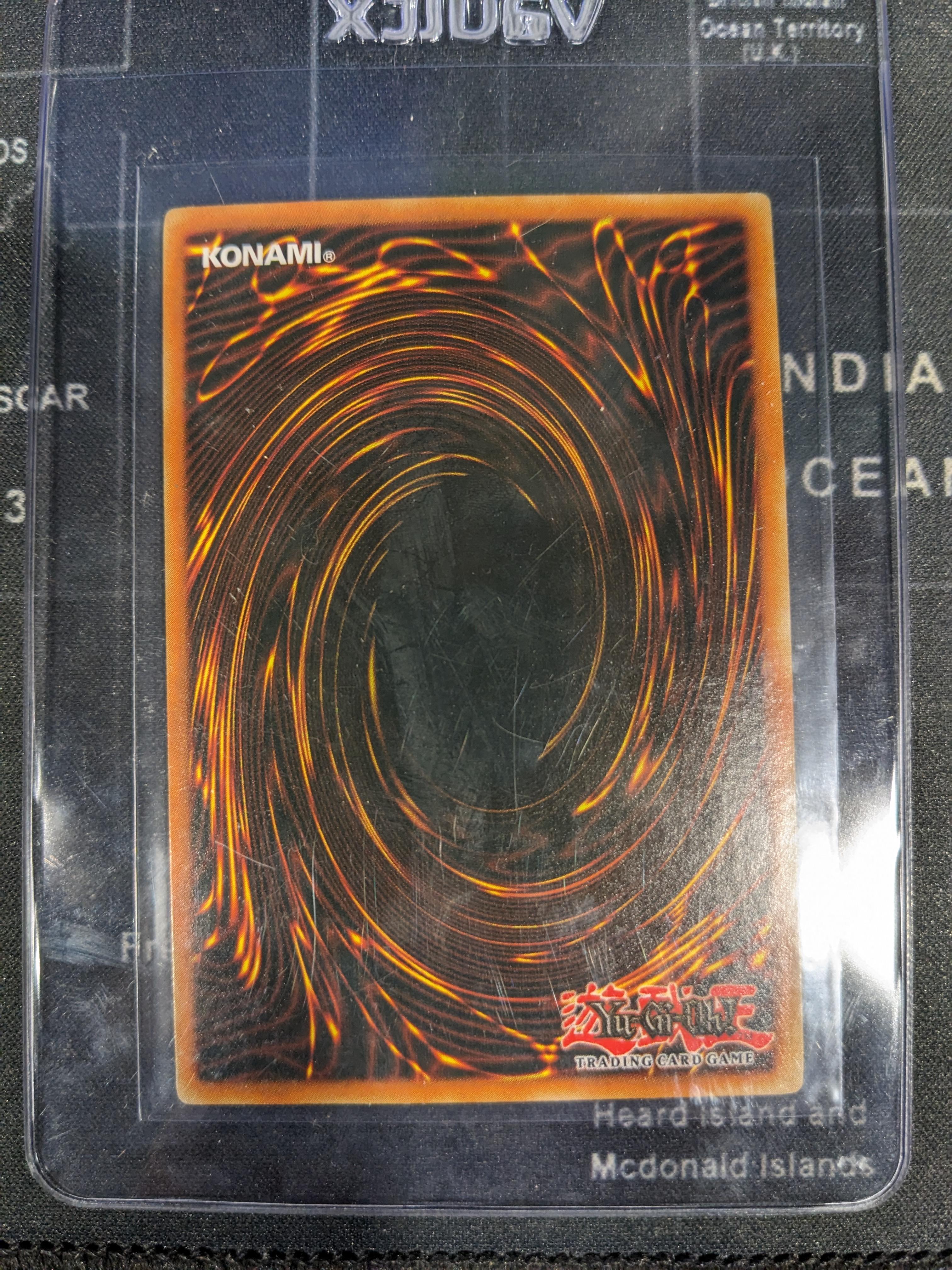
The reverse side of a Yu-Gi-Oh! card is one of the most frequent areas for grade deductions. The deep navy and brown color palette of the classic card back accentuates minor whitening.
The deep navy back of a Yu-Gi-Oh! card reveals corner chips far faster than lighter card backs.
- Inspect corners under magnification: Factory cutting blades can leave rough micro-burrs along the curved corners. Look closely at the top-right and bottom-left back corners, which are most vulnerable to pack-fresh wear.
- Analyze edge flaking: Angle light parallel to the card borders. Factory cuts often produce micro-chipping along the top edge of the card back right out of the wrapper.
Centering Measurement
Centering on small-format cards requires tight tolerances. Third-party grading services typically look for 55/45 to 60/40 centering on the front for a Gem Mint designation, and up to 75/25 on the back.
- Measure border ratios: Because the outer borders on Yu-Gi-Oh! cards are narrow, a shift of half a millimeter alters the ratio significantly. Measure from the outer edge of the card to the inner frame border.
- Evaluate card art framing: On Secret Rares and higher rarities, ensure the holofoil pattern aligns correctly within the artwork window rather than bleeding excessively into the text box.
Preparation and Sleeving
Handling small-size cards requires dedicated supplies to prevent edge damage during preparation.
- Use small-size penny sleeves: Standard-size protective sleeves leave excess room, allowing the card to shift and rub against plastic seams in transit. Always use sleeves manufactured specifically for Japanese-size cardstock.
- Use semi-rigid holders: When submitting for grading, place the sleeved card inside a clean semi-rigid card holder with a pull tab attached to the sleeve to avoid pushing down on the top edge.